



 Your installation date and time will be confirmed during a follow-up confirmation.










National Heat Pump Rebate Program
 Ugur Lafci
Published on: Nov 23, 2026

The National Heat Pump Rebate is a new federal program that pays Ontario homeowners $2,000, or up to $10,000 if your household's after-tax income is at or below the median, toward an eligible heat pump. Based on both programs' current published rules, it can be combined with Ontario's Home Renovation Savings (HRS) rebate, as long as the total funding doesn't exceed the cost to supply and install the heat pump. The online application portal opens in early 2027, but heat pumps installed on or after November 1, 2026 can qualify retroactively, so you don't have to wait to install.
What is the National Heat Pump Rebate?
The National Heat Pump Rebate is a federal program run by Environment and Climate Change Canada, part of a $2 billion, eight-year plan to help households switch to efficient electric heat pumps. It's a cash rebate paid by direct deposit, and it's currently funded through 2034.
One important catch: if your address already received Canada Greener Homes Grant or Oil to Heat Pump Affordability funding for a heat pump, it isn't eligible for the new rebate.
How much can you get?
There are two rebate levels:
| Household | Rebate |
| After-tax income at or below the median for your household size and province | Up to $10,000 (not exceeding total project cost) |
| After-tax income above the median | $2,000 |
Ontario income thresholds for the $10,000 rebate
These are the median after-tax household incomes the program uses for Ontario. If your household is at or under the number for your size, you may qualify for the higher amount.
| Household size | Median after-tax income (Ontario) |
| 1 person | $46,981 |
| 2 people | $92,884 |
| 3 people | $119,850 |
| 4 people | $146,217 |
| 5 or more | $158,202 |
Household size counts you, your spouse or common-law partner, and any dependents living at the home.
How to calculate your after-tax household income
1. On your most recent tax return, subtract line 43500 (total tax payable) from line 23600 (net income).
2. Do the same for your spouse or common-law partner, if you have one.
3. Add the two results together.
4. Compare the total with the threshold for your household size.
This is after-tax income, which is a lot lower than the gross salary number most people think of. Run the numbers before assuming you only qualify for $2,000.
What counts toward the project cost
The rebate covers the total cost of the installation, including equipment, labour and necessary supporting work such as ductwork modifications and electrical upgrades directly tied to the heat pump. Keep receipts for all of it: they're required to support the costs you claim.
Who qualifies?
• You must own the home where the heat pump is installed. It doesn't have to be your primary residence, so rental properties count, but it's one rebate per household: a landlord can't claim more than one rebate across multiple properties.
• You don't have to wait for a breakdown. Planned and emergency replacements both qualify.
• Your current heating can be almost anything: natural gas furnaces or boilers, electric furnaces, electric baseboards, existing heat pumps, oil, propane, diesel, coal, wood or biomass.
• You can keep your furnace. The existing system doesn't need to be removed, as long as the new heat pump can heat the whole home on its own.
• Replacing an air conditioner works too. Swapping an old AC for an eligible heat pump can qualify, again as long as the heat pump is sized to heat the entire home.
• No energy audit is needed before or after installation.
Which heat pumps are eligible?
The heat pump must be on the program's eligible product list on the date it's installed. The list is updated quarterly (March, June, September and December). If a model is later removed, it still qualifies as long as you bought or installed it before the removal.
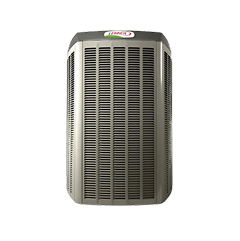
For cold climate air source heat pumps, the most common type in Ontario homes, the unit must be listed with both NEEP and Natural Resources Canada and meet these specs:
• HSPF2 (Region V) of 6.6 or higher, and SEER2 of 15.2 or higher
• At least 70% of its rated heating capacity still available at -15°C
• A COP of at least 1.8 at -15°C
• A variable-capacity compressor (at least three speeds, or continuously variable)
Ground source (geothermal) heat pumps and cold climate air-to-water heat pumps are also covered under their own criteria.
For split systems, the indoor unit, outdoor unit and furnace (where applicable) must be installed together as the same AHRI-matched combination. Ask your installer for the AHRI number: you'll need it to apply.
Can the National Heat Pump Rebate be combined with Home Renovation Savings?
Based on current published rules, Yes. Ontario's Home Renovation Savings program (delivered by Enbridge Gas and Save on Energy allows funding from other sources, provided the combined total doesn't exceed 100% of the cost to supply and install the heat pump. What HRS doesn't allow is doubling up with another Enbridge, Save on Energy or Government of Ontario incentive on the same heat pump.
The federal program says households may be able to combine its rebate with other retrofit programs, with more details coming before launch. It's up to each household to check the rules of every program they apply to.
Home Renovation Savings heat pump rebates
| Your current heating | Cold climate air source | Ground source |
| Electricity, oil, propane or wood | $1,250 per ton, up to $7,500 | $2,000 per ton, up to $12,000 |
| Enbridge natural gas | $500 per ton, up to $2,000 | $3,000 |
| Rental heat pump (any fuel) | $500 per ton, up to $2,000 | $3,000 |
Air source rebates are based on the heat pump's total rated heating capacity at 8.3°C.
How to apply?
Getting the order wrong is the easiest way to lose a rebate. HRS is strict about timing; the federal program is more forgiving.
1. Check your eligibility for HRS and pick a participating HVAC contractor from the program's directory.
2. Get HRS pre-approval before any work starts. Your contractor submits the pre-installation application. Installations done before approval aren't eligible.
3. Confirm the model is on the federal eligible product list and get its AHRI number.
4. Install. If the federal portal isn't open yet, keep every invoice, receipt, proof of payment and installation document.
5. Contractor submits the HRS post-installation application. HRS cheques arrive by mail, typically within 60 days of approval.
6. Apply for the federal rebate yourself once the portal opens in early 2027.
How the federal application works
1. Create an account and apply online with the AHRI number of the heat pump you're considering. If you're applying for the higher amount, you'll also need your Social Insurance Number.
2. Get confirmation of your eligibility and rebate amount.
3. Install the heat pump.
4. Log back in, add your banking details, and upload your invoice showing the installer, equipment make, model and AHRI number, number of units and total project cost.
5. The government reviews it.
6. Payment arrives by direct deposit.
Deadlines: if you apply before installing, receipts are due within 6 months of your funding confirmation. If you installed during the retroactive window (November 1, 2026 to launch), you'll need to complete the application within 6 months of your installation date.
Renting a heat pump? Read this first
HRS has a separate rental stream: $500 per ton, up to $2,000 for a cold climate air source heat pump, regardless of how you heat your home. The federal rules ask for receipts and proof of payment for the total project cost, and the government hasn't said how rented or subscription equipment will be treated. If the federal rebate is a big part of your decision, ask before you sign.
Should you wait for the portal to open?
For most Ontario homeowners, no. The retroactive window means a heat pump installed today can still be claimed once applications open in early 2027, and HRS is already accepting heat pump applications.
The one thing you can't skip is the HRS pre-approval. Get that first, keep your paperwork, and you're positioned for both rebates.
FAQ
Q. Is the National Heat Pump Rebate open yet?
A. Not yet. The application portal is expected to open in early 2027. Heat pumps installed on or after November 1, 2026 can qualify retroactively.
Q. Do I need an energy audit?
A. No. Neither the federal rebate nor the HRS heat pump rebate requires one.
Q. Can I keep my gas furnace?
A. Yes. The furnace can stay as backup, as long as the heat pump is capable of heating the whole home.
Q. Can my contractor apply for the federal rebate for me?
A. No. Federal applications must come from the homeowner. For HRS, it's the opposite: your participating contractor submits the applications.
Q. I got the Canada Greener Homes Grant a few years ago. Can I apply?
A. Not if that grant (or the Oil to Heat Pump Affordability program) already paid for a heat pump at the same address.
Q. Does it work for a rental property I own?
A. Yes, the home doesn't have to be your primary residence. But you can only receive one rebate per household, even if you own several properties.
Talk to Go Lime about your heat pump
Not sure which heat pump fits your home, or what you'd qualify for? Go Lime's home comfort experts can help you pick an eligible, properly sized cold climate heat pump and walk you through the paperwork for both rebates.
Rebate details are current as of November 23, 2026 and are subject to change. Final eligibility is decided by each program. Check canada.ca and homerenovationsavings.ca for the latest terms.


